
Sitemap
A list of all the posts and pages found on the site. For you robots out there is an XML version available for digesting as well.
Pages
Posts
Future Blog Post
Published:
This post will show up by default. To disable scheduling of future posts, edit config.yml and set future: false.
Handling phylogeny data
Published:
This is a blog post on handling phylogeny data in R Statistical Software. The objective was to see how we map species on the phylogeny of the whole taxa. The main packages used were ape, and phytools to handle the phylogenetic analysis. This matters because studying closely related species often means studying animals that share similar behaviors, ecologies, and life histories. As a result, our understanding of animal movement may be much deeper for certain kinds of mammals than for mammals as a whole. The figure maps tracked species onto the evolutionary tree of mammals. Red branches represent lineages that have been studied using remote tracking technologies, while branch colors indicate different mammalian orders.
Blog Post number 4
Published:
This is a sample blog post. Lorem ipsum I can’t remember the rest of lorem ipsum and don’t have an internet connection right now. Testing testing testing this blog post. Blog posts are cool.
Blog Post number 3
Published:
This is a sample blog post. Lorem ipsum I can’t remember the rest of lorem ipsum and don’t have an internet connection right now. Testing testing testing this blog post. Blog posts are cool.
Blog Post number 2
Published:
This is a sample blog post. Lorem ipsum I can’t remember the rest of lorem ipsum and don’t have an internet connection right now. Testing testing testing this blog post. Blog posts are cool.
portfolio
Wildlife photography
I am pusuing my interest to showcase animals in natural environments. I have trtavelled acaross the world to photograph wild animals. 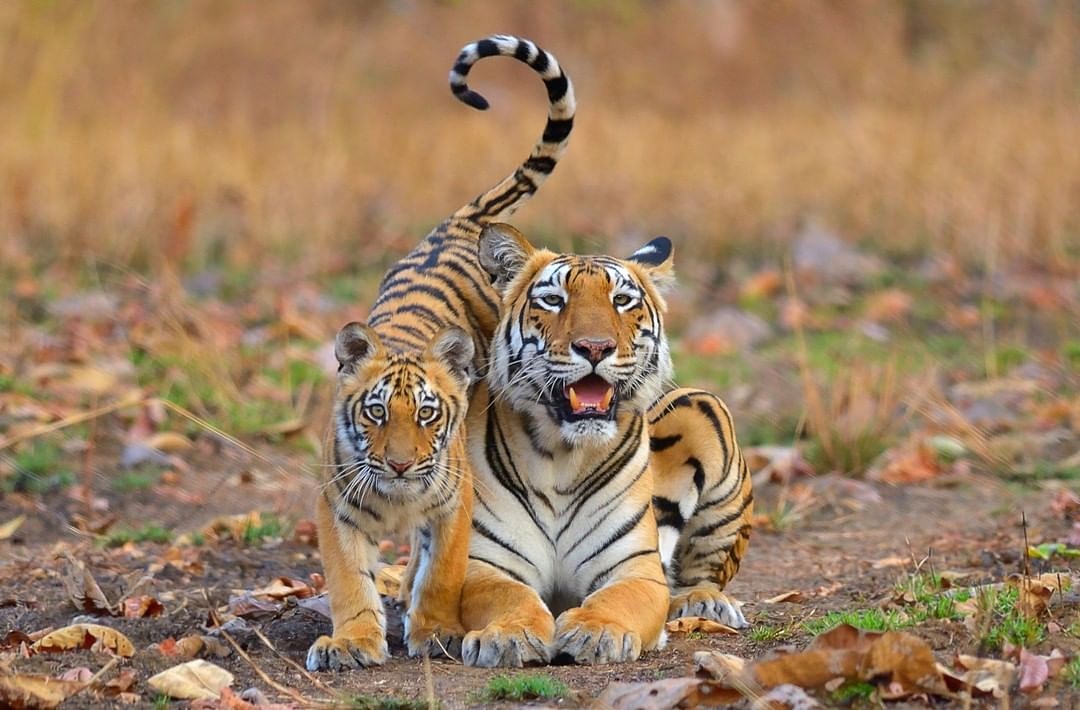
Landscape Photography
Beyond capturing animals, capturing landscapes (Mostly natural) also interests me.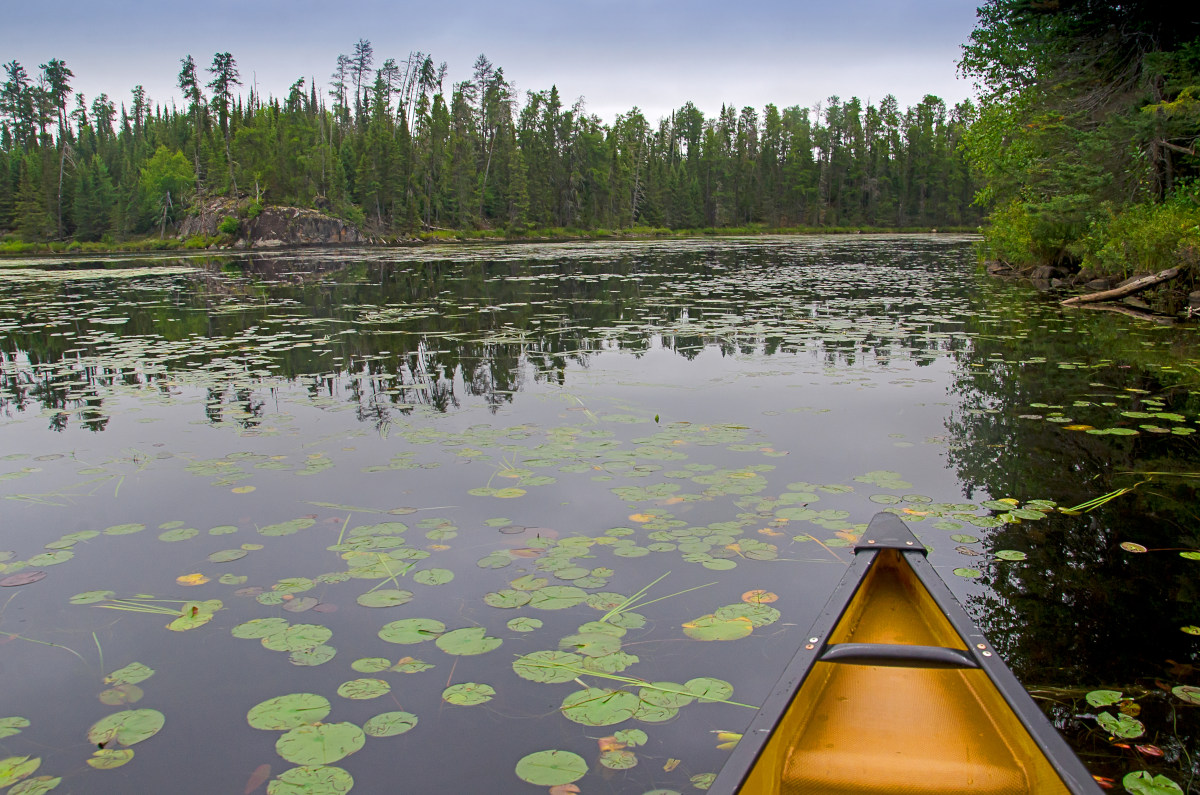
publications
Population density and habitat use of two sympatric small cats in a central Indian reserve
Published in PLos One, 2020
Small cats are more specialized than their larger cousins in terms of resource selection. Studies on small cat population and habitat preference are critical to evaluate their status to ensure better management and conservation. We estimated abundance of two widespread small cats, the jungle cat, and the rusty-spotted cat. We investigated their habitat associations using camera-trap captures from a central Indian tiger reserve. Forest cover and evapotranspiration were positively associated with rusty-spotted cat occurrence, whereas both factors had a significant negative relation with jungle cat occurrence. The results indicated habitat segregation between these small cats, with affinities of rusty-spotted cat and jungle cat towards well-forested and open scrubland areas, respectively.
Recommended citation: Chatterjee, Nilanjan, Parag Nigam, and Bilal Habib. "Population density and habitat use of two sympatric small cats in a central Indian reserve." Plos One 15.6 (2020): e0233569.
Download Paper | Download Slides
Deciphering the rarity–detectability continuum: optimizing survey design for terrestrial mammalian community
Published in Ecosphere, 2021
Motion-triggered camera traps are an increasingly popular tool for monitoring terrestrial species over large landscapes. Over the years, occupancy has become a robust and unbiased state variable to monitor species worldwide. However, the optimal sampling design required for robust estimations of occupancy is lacking for many species. Here, we estimated the optimum sampling design by varying the number of sites (50–400) and sampling days (10–25) for a range of mammal species using camera-trap survey data from central India.
Recommended citation: Chatterjee, Nilanjan, et al. "Deciphering the rarity–detectability continuum: optimizing survey design for terrestrial mammalian community." Ecosphere 12.9 (2021): e03748.
Download Paper | Download Slides
Predicting carrying capacity of a large carnivore from prey densities: a new approach
Published in PeerJ, 2023
Large carnivores play a crucial role in maintaining the balance of the ecosystem. Successful conservation initiatives have often led to a huge increase in predators which has often led to negative interactions with humans. Here, we have derived a new equation to estimate the carrying capacity of tigers based on the individual prey species density.
Recommended citation: Chatterjee, Nilanjan, et al. "Predicting carrying capacity of a large carnivore from prey densities: a new approach." PeerJ 11 (2023): e15914.
Download Paper
Modelling individual variability in habitat selection and movement using integrated step‐selection analysis
Published in Methods in Ecology and Evolution, 2024
This paper is about the number 1. The number 2 is left for future work.
Recommended citation: Chatterjee, Nilanjan, et al. "Modelling individual variability in habitat selection and movement using integrated step‐selection analysis." Methods in Ecology and Evolution 15.6 (2024): 1034-1047.
Download Paper | Download Slides
talks
Mesopredator spatial and temporal response to large-predators and anthropogenic activities in a Central Indian Reserve
Published:
The survival and long-term persistence of mammalian carnivores is a key conservation challenge in developing countries like India. Many species of carnivores are forced to inhabit unprotected human-dominated landscapes given the miniscule proportion of land designated to protected areas. Differential human activity across a landscape grossly influences the activity patterns of both predator and prey species, depending on their degree of specialisation in feeding habits and habitat use. There lies a dearth of studies addressing the spatio-temporal dynamics of large and meso-predators in such disturbed landscapes. We conducted camera trap studies in dry deciduous forests of Tadoba-Andhari Tiger Reserve in Maharashtra, Central India hypothesizing that temporal and spatial partitioning among meso- and apex predators would be affected across landscapes with differential anthropogenic activities. Motion-detecting camera traps were systematically deployed across an area of 1700 sq.km following a systematic grid sampling with a gradient of human use. Temporal activity overlap for different species was calculated from photo-capture timings using non-parametric kernel density distribution. We found that spatial and temporal partitioning between apex-predators and meso-predators decreased with increase in difference in body sizes. Tigers and leopards showed pronounced spatial partitioning. Dholes avoided tigers through temporal segregation, their activity peaks following plummets in the activity of the apex carnivore of this landscape. Species altered their activities temporally at sites with higher human activities. This was reflected as higher temporal overlap between the activities of predators at such locations. Results from our study provide insights on the ecology of a spectrum of carnivore species varying markedly in their body-sizes and feeding habits. Planning effective conservation strategies require a holistic understanding of the spatio-temporal dynamics between large predators, mesopredators and prey at multiple scales in the backdrop of varying anthropogenic influences. Marking of prioritisation areas could facilitate persistence of carnivores in this multi-use landscape.
Population density and habitat use of two sympatric small cats in a central Indian reserve
Published:
Quantifying species-habitat associations using data pooled across studies and collection methods
Published:
Biodiversity monitoring is fundamental for making informed policy and conservation management decisions, and often requires collecting data over large spatial and temporal scales. Advancements in earth observation systems and analytical methods offer new opportunities to link animal location data to remotely-sensed environmental data collected via a range of satellite-based and Earth-based sensors. However, resolution of animal location data—including sampling rate and measurement accuracy—varies due to the use of different collection methods, posing challenges when inferring species-habitat associations based on data pooled across studies and years. Here, we illustrate these challenges using two example datasets representing species of conservation concern in the Yellowstone to Yukon region of North America, documenting mountain caribou locations over 28 years (1988-2016) and wolves over 10 years (2000-2011). Over time, sampling rates increased significantly for both datasets, from an average of 1 location/week/animal in 1988 to 3-4 locations/day/animal in 2010. In addition, the total number of locations per animal increased from an average of 37 between 1988 and 1990 to 1,312 between 2010 and 2016.
teaching
Workshop Teaching experience
Workshop, Multiple venues across the world, 2023
This is a brief description of the teaching experience I had conducting workshops in different conferences on various topics.
Course Teaching experience
Undergraduate and Masters course, , 2025
Biometry Course at Department of Fisheries, Wildlife and Conservation Biology, University of Minnesota,
Taught Biometry course for undergraduate students. Taught two theory classes and one practical class on basic statistics.