Wildlife photography
I am pusuing my interest to showcase animals in natural environments. I have trtavelled acaross the world to photograph wild animals. 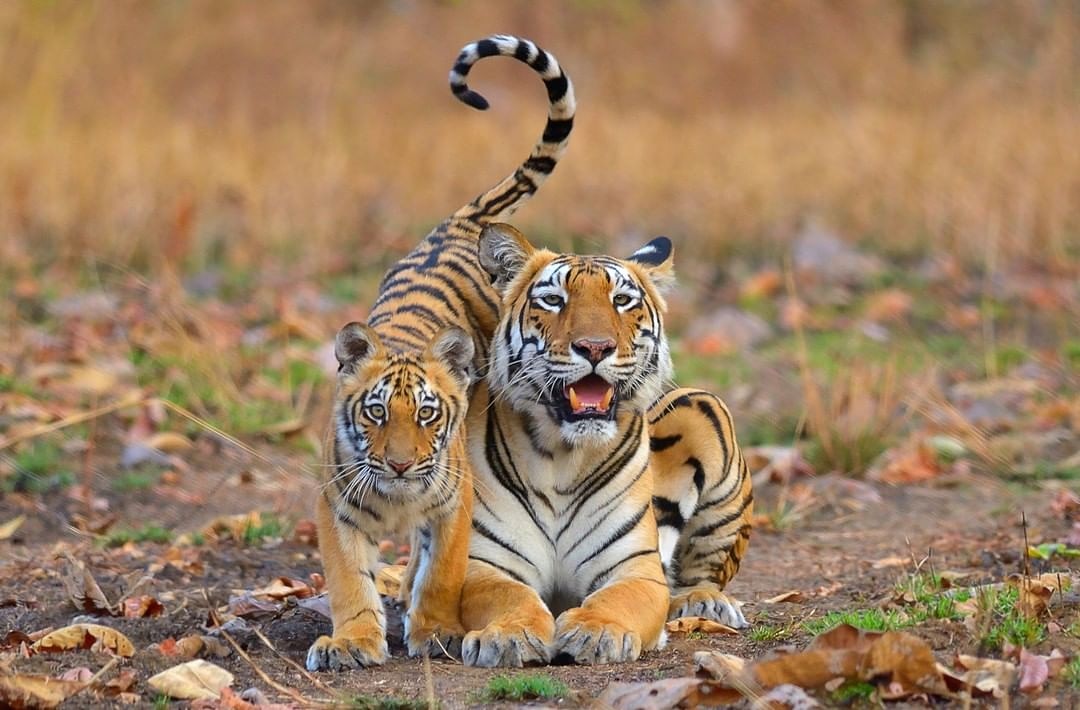

I am pusuing my interest to showcase animals in natural environments. I have trtavelled acaross the world to photograph wild animals.
Beyond capturing animals, capturing landscapes (Mostly natural) also interests me.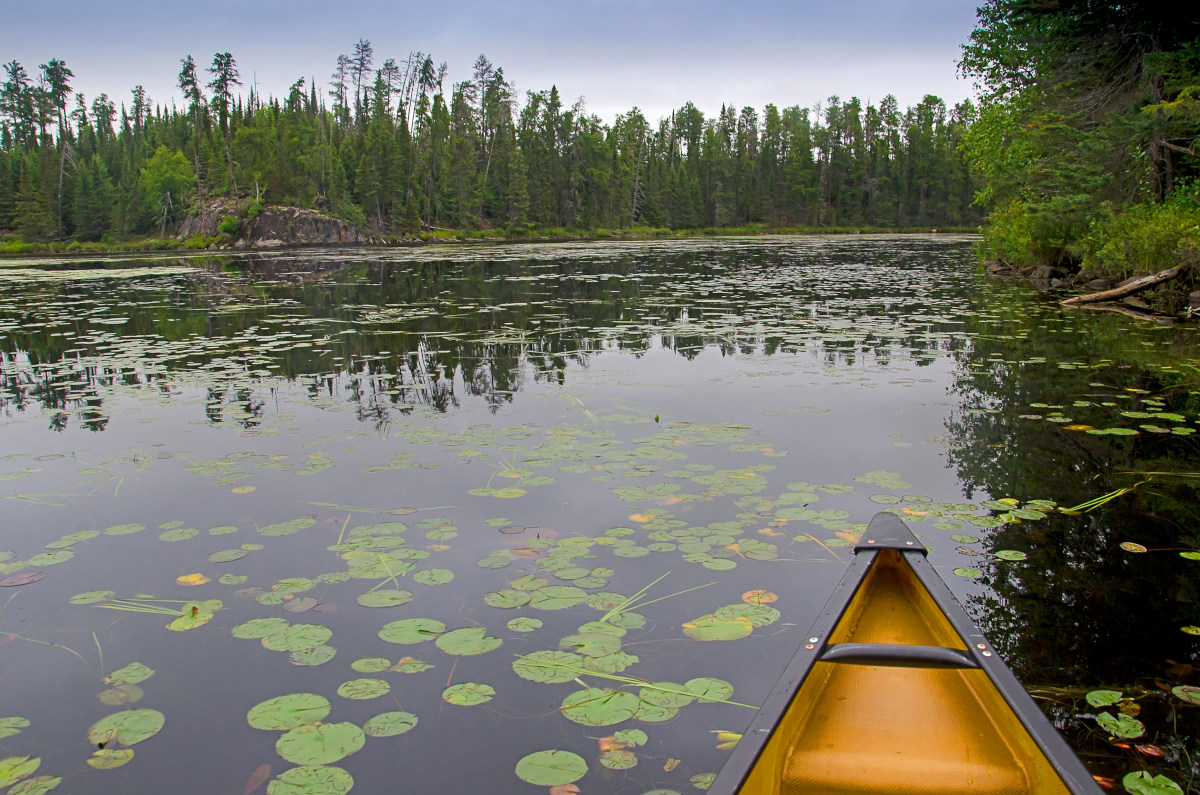
Published in Cat News 62, 22–23, 2015
Recommended citation: Davate, M., Chatterjee, N., Dashahre, A., Habib, B., Nigam, P., et al. (2015). "Recent records of rusty-spotted cat in dry deciduous forest of Tadoba, Maharashtra, India" Cat News, 62, 22–23.
Published in Wildlife Institute of India, Technical Report, 2015
Recommended citation: Habib, B., Nigam, P., Chatterjee, N., et al. (2015). "Status of Tigers, Co-Predator and Prey in Tadoba Andhari Tiger Reserve (TATR)" Wildlife Institute of India, Technical Report.
Published in 5th European Congress of Conservation Biology (ECCB2018), 2018
Recommended citation: Chatterjee, N., Davate, M., Habib, B., & Nigam, P. (2018). "Mesopredator spatial and temporal response to large predators and anthropogenic activities in a Central Indian reserve" 5th European Congress of Conservation Biology (ECCB2018).
Download Paper
Published in Scientific Reports 9, 11627, 2019
Recommended citation: Khan, S., Chatterjee, N., & Habib, B. (2019). "Testing performance of large-scale surveys in determining trends for the critically endangered Great Indian Bustard Ardeotis nigriceps" Scientific Reports, 9, 11627.
Download Paper
Published in Conservation Science and Practice 1(12), e124, 2019
Recommended citation: Shrotriya, S., Chatterjee, N., & Habib, B. (2019). "Casual analysis and short-sighted inferences: A response to Majgaonkar et al. 2019" Conservation Science and Practice, 1(12), e124.
Download Paper
Published in Cat News 69, 17–18, 2019
Recommended citation: Bhattacharya, A., Chatterjee, N., Angrish, K., Shrotriya, S., et al. (2019). "First photographic evidence of snow leopard from Lippa Asrang Wildlife Sanctuary, India" Cat News, 69, 17–18.
Published in Ecosystems and People 15(1), 90–101, 2019
This is where the project started. Rivers respond to what happens across their whole catchment — land use, channel modification, floodplain and riparian change — and those effects propagate downstream. If a group of birds is closely tied to river conditions, then the birds themselves might tell us something about the river that a water sample cannot.
Recommended citation: Sinha, A., Chatterjee, N., Ormerod, S. J., Adhikari, B. S., & Krishnamurthy, R. (2019). "River birds as potential indicators of local- and catchment-scale influences on Himalayan river ecosystems" Ecosystems and People, 15(1), 90–101.
Download Paper
Published in Zoological Studies 59, e11, 2020
Recommended citation: Bhattacharya, A., Chatterjee, N., Rawat, G. S., & Habib, B. (2020). "Blue sheep resource selection in alpine grasslands of a western Himalayan landscape — a point process approach" Zoological Studies, 59, e11.
Download Paper
Published in International Bear News 29(1), 23–25, 2020
Recommended citation: Bhattacharya, A., Chatterjee, N., Angrish, K., Shrotriya, S., et al. (2020). "First photographic evidence of Himalayan brown bear from Lippa-Asrang Wildlife Sanctuary, Himachal Pradesh, India" International Bear News, 29(1), 23–25.
Published in Frontiers in Ecology and Evolution 8, 585256, 2020
Recommended citation: Chatterjee, N., Nigam, P., & Habib, B. (2020). "Population Estimate, Habitat-Use and Activity Patterns of the Honey Badger in a Dry-Deciduous Forest of Central India" Frontiers in Ecology and Evolution, 8, 585256.
Download Paper
Published in Scientific Reports 10, 18888, 2020
Recommended citation: Saxena, A., Chatterjee, N., Rajvanshi, A., & Habib, B. (2020). "Integrating large mammal behaviour and traffic flow to determine traversability of roads with heterogeneous traffic on a Central Indian Highway" Scientific Reports, 10, 18888.
Download Paper
Published in PLOS ONE 15(6), e0233569, 2020
Small cats are far more specialised than their larger relatives in how they use habitat, yet they are rarely surveyed — which makes it hard to say whether their populations are secure. This study used camera-trap captures from a central Indian tiger reserve to estimate the abundance of two widespread species, the jungle cat and the rusty-spotted cat, and to ask what separates them on the landscape.
Recommended citation: Chatterjee, N., Nigam, P., & Habib, B. (2020). "Population density and habitat use of two sympatric small cats in a central Indian reserve" PLOS ONE, 15(6), e0233569.
Download Paper
Published in Ecosphere 12(9), e03748, 2021
Recommended citation: Chatterjee, N., Schuttler, S., Nigam, P., & Habib, B. (2021). "Deciphering the rarity–detectability continuum: optimizing survey design for terrestrial mammalian community" Ecosphere, 12(9), e03748.
Download Paper
Published in Ursus 2022(33e8), 1–10, 2022
Recommended citation: Bhattacharya, A., Chatterjee, N., Angrish, K., Meena, D., Sinha, B. C., & Habib, B. (2022). "Population estimation of Asiatic black bear in the Himalayan region of India using camera traps" Ursus, 2022(33e8), 1–10.
Download Paper
Published in Frontiers in Ecology and Evolution 10, 788184, 2022
Recommended citation: Sinha, A., Menzies, R. K., Chatterjee, N., Rao, M., & Naniwadekar, R. (2022). "Drivers of taxonomic, phylogenetic, and functional beta diversity of Himalayan riverine birds" Frontiers in Ecology and Evolution, 10, 788184.
Download Paper
Published in Frontiers in Conservation Science 3, 999195, 2022
Recommended citation: Chatterjee, M., Chatterjee, N., Chandel, P., Bhattacharya, T., & Kaul, R. (2022). "Predicting negative human–tiger (Panthera tigris) interactions in mosaic landscapes around Dudhwa and Pilibhit Tiger Reserves in India" Frontiers in Conservation Science, 3, 999195.
Download Paper
Published in Ecology and Evolution 12(6), e9012, 2022
The rivers of the Himalaya hold the most diverse community of specialist river birds on Earth. This paper asks how that coexistence is possible: do species sort themselves by habitat, by body size and foraging style, by shared ancestry — or by all three at once?
Recommended citation: Sinha, A., Chatterjee, N., Krishnamurthy, R., & Ormerod, S. J. (2022). "Community assembly, functional traits, and phylogeny in Himalayan river birds" Ecology and Evolution, 12(6), e9012.
Download Paper
Published in Tropical Ecology 64(3), 571–577, 2023
Recommended citation: Bhattacharya, A., Chatterjee, N., Rawat, G. S., & Habib, B. (2023). "Optimal distance to escape terrain of bharal in presence of livestock in Greater Himalayan alpine rangelands" Tropical Ecology, 64(3), 571–577.
Download Paper
Published in PeerJ 11, e15914, 2023
Recommended citation: Chatterjee, N., Mukhopadhyay, I., Nigam, P., & Habib, B. (2023). "Predicting carrying capacity of a large carnivore from prey densities: a new approach" PeerJ, 11, e15914.
Download Paper
Published in Methods in Ecology and Evolution 15(6), 1034–1047, 2024
Recommended citation: Chatterjee, N., Wolfson, D., Kim, D., Velez, J., Freeman, S., Bacheler, N. M., et al. (2024). "Modelling individual variability in habitat selection and movement using integrated step-selection analysis" Methods in Ecology and Evolution, 15(6), 1034–1047.
Download Paper
Published in International Journal for Educational Integrity 21(1), 17, 2025
Recommended citation: Bhattacharyya, S., Chatterjee, N., & Ramanathan, A. (2025). "Understanding the patterns and magnitude of life science publication retractions in the last four decades" International Journal for Educational Integrity, 21(1), 17.
Download Paper
Published in Proceedings of the Royal Society B 292(2051), 20250679, 2025
Recommended citation: Shaw, A. K., Fouda, L., Mezzini, S., Kim, D., Chatterjee, N., et al. (2025). "Perceived and observed biases within scientific communities: a case study in movement ecology" Proceedings of the Royal Society B, 292(2051), 20250679.
Download Paper
Published in Global Ecology and Biogeography 34(1), e13941, 2025
Recommended citation: Rooney, B., Kays, R., Cove, M. V., et al. (2025). "SNAPSHOT USA 2019–2023: The First Five Years of Data From a Coordinated Camera Trap Survey of the United States" Global Ecology and Biogeography, 34(1), e13941.
Download Paper
Published in Biotropica 57(2), e70017, 2025
Counting birds along a mountain river looks simple until you ask what the count actually means. Some species sit in the open on a boulder; others slip past under the noise of the water. Raw counts therefore mix real abundance with how easy a bird is to see — and that problem is acute in the steep, fast, logistically difficult rivers of the Himalaya, where almost no long-term monitoring exists.
Recommended citation: Sinha, A., Chatterjee, N., Ormerod, S. J., & Krishnamurthy, R. (2025). "Population Variability and Apparent Recent Decline of River Birds in the Indian Himalaya" Biotropica, 57(2), e70017.
Download Paper
Published in Methods in Ecology and Evolution, 2026
Recommended citation: Cooper, N., & the BES Data and Code Hackathon Group (2026). "Data- and code-archiving in the British Ecological Society journals: present status and recommendations for future improvements" Methods in Ecology and Evolution.
Download Paper
Published in Movement Ecology, 2026
Recommended citation: Kuruppath, S. V., Chatterjee, N., & Krishnamurthy, R. (2026). "Of shared homes and pathways: free-ranging dog movement and habitat use in a human-wildlife landscape in India" Movement Ecology.
Download Paper
Published in Global Ecology and Biogeography 35(3), e70212, 2026
Recommended citation: Franke, B. H., Schipper, A. M., Avgar, T., Börger, L., Chatterjee, N., et al. (2026). "Local and landscape-level environmental conditions drive habitat selection across terrestrial mammal species" Global Ecology and Biogeography, 35(3), e70212.
Download Paper
Published in WIREs Water 13(4), e70082, 2026
Rivers and the strips of land beside them form one of the most productive edges in nature: energy and matter move constantly between water and land, and a remarkable set of birds has evolved to live on that exchange. This review is the first to treat those birds as a single global group.
Recommended citation: Sinha, A., Chatterjee, N., & Ormerod, S. J. (2026). "Conserving the World's Specialist Riverine Birds" WIREs Water, 13(4), e70082.
Download Paper
Published:
The survival and long-term persistence of mammalian carnivores is a key conservation challenge in developing countries like India. Many species of carnivores are forced to inhabit unprotected human-dominated landscapes given the miniscule proportion of land designated to protected areas. Differential human activity across a landscape grossly influences the activity patterns of both predator and prey species, depending on their degree of specialisation in feeding habits and habitat use. There lies a dearth of studies addressing the spatio-temporal dynamics of large and meso-predators in such disturbed landscapes. We conducted camera trap studies in dry deciduous forests of Tadoba-Andhari Tiger Reserve in Maharashtra, Central India hypothesizing that temporal and spatial partitioning among meso- and apex predators would be affected across landscapes with differential anthropogenic activities. Motion-detecting camera traps were systematically deployed across an area of 1700 sq.km following a systematic grid sampling with a gradient of human use. Temporal activity overlap for different species was calculated from photo-capture timings using non-parametric kernel density distribution. We found that spatial and temporal partitioning between apex-predators and meso-predators decreased with increase in difference in body sizes. Tigers and leopards showed pronounced spatial partitioning. Dholes avoided tigers through temporal segregation, their activity peaks following plummets in the activity of the apex carnivore of this landscape. Species altered their activities temporally at sites with higher human activities. This was reflected as higher temporal overlap between the activities of predators at such locations. Results from our study provide insights on the ecology of a spectrum of carnivore species varying markedly in their body-sizes and feeding habits. Planning effective conservation strategies require a holistic understanding of the spatio-temporal dynamics between large predators, mesopredators and prey at multiple scales in the backdrop of varying anthropogenic influences. Marking of prioritisation areas could facilitate persistence of carnivores in this multi-use landscape.
Published:
Published:
Biodiversity monitoring is fundamental for making informed policy and conservation management decisions, and often requires collecting data over large spatial and temporal scales. Advancements in earth observation systems and analytical methods offer new opportunities to link animal location data to remotely-sensed environmental data collected via a range of satellite-based and Earth-based sensors. However, resolution of animal location data—including sampling rate and measurement accuracy—varies due to the use of different collection methods, posing challenges when inferring species-habitat associations based on data pooled across studies and years. Here, we illustrate these challenges using two example datasets representing species of conservation concern in the Yellowstone to Yukon region of North America, documenting mountain caribou locations over 28 years (1988-2016) and wolves over 10 years (2000-2011). Over time, sampling rates increased significantly for both datasets, from an average of 1 location/week/animal in 1988 to 3-4 locations/day/animal in 2010. In addition, the total number of locations per animal increased from an average of 37 between 1988 and 1990 to 1,312 between 2010 and 2016.
Workshop, Multiple venues across the world, 2023
This is a brief description of the teaching experience I had conducting workshops in different conferences on various topics.
Undergraduate and Masters course, , 2025
Taught Biometry course for undergraduate students. Taught two theory classes and one practical class on basic statistics.